> For the complete documentation index, see [llms.txt](https://docs.roboflow.com/llms.txt). Markdown versions of documentation pages are available by appending `.md` to page URLs; this page is available as [Markdown](https://docs.roboflow.com/datasets/annotate/annotate/edit-keypoint-skeletons.md).
# Set Keypoint Skeletons
Keypoint Skeletons are the definition for an object's points, edges, and symmetries. Only relevant for Keypoint Detection project types.
## Keypoint Skeletons
Keypoint Skeletons are a necessary part of a **Keypoint Detection project**. The skeleton informs the number of keypoints in your objects, as well as their default positions, names, colors, and edges. Before labelling [go to your project Classes](/datasets/manage/manage-datasets/manage-classes.md) and set up your skeletons.
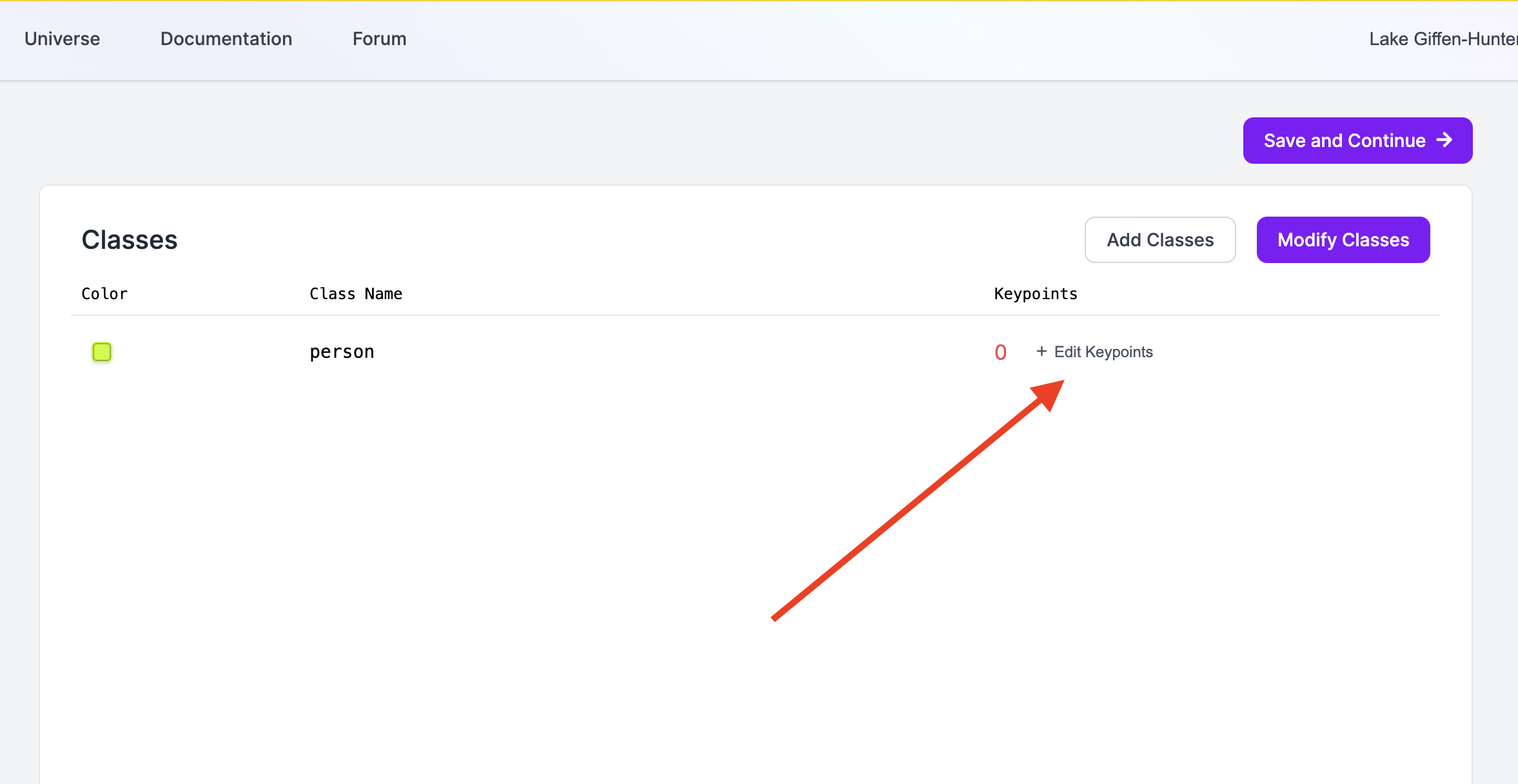
After adding the name for your class (the overall object name, such as person, or car), you will select Edit Keypoints.
Edit Keypoints button is on the Classes page
### Skeleton Editor
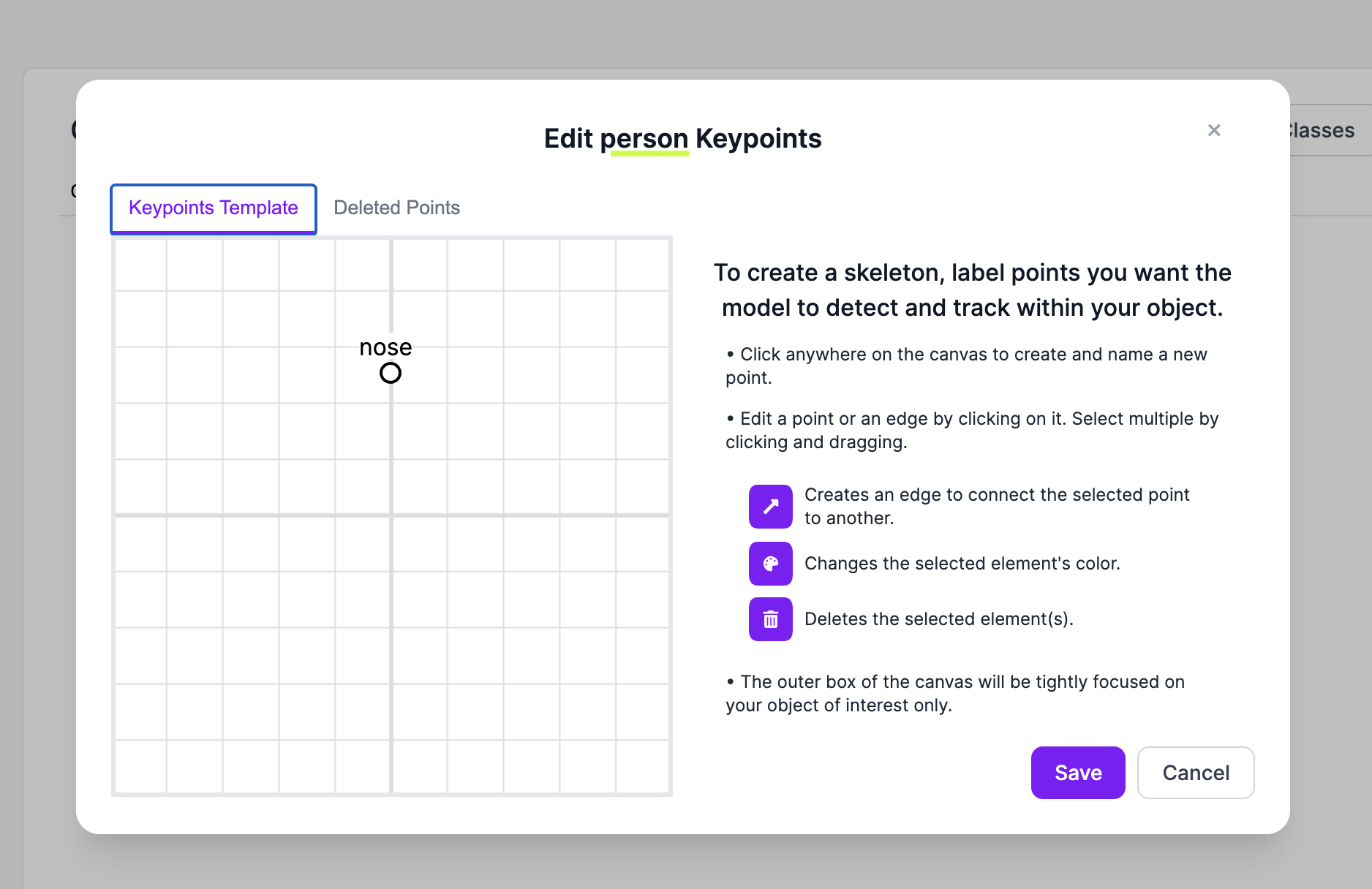
Click anywhere to create your first point, and name it. Then you can keep creating points, or select a point to create an edge, edit the color, or delete it.
Visual representation of the Skeleton Editor
Once you are done editing, click Save, and continue to upload and label your images. Your skeleton should show up inside the annotation bounding box.
See [how to label Keypoints](/datasets/annotate/annotate/annotate-keypoints.md).